

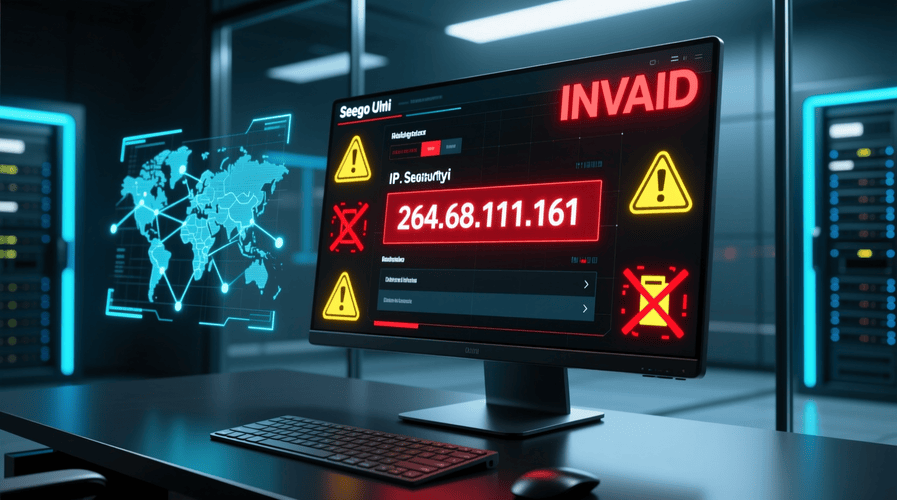
Nowadays, numbers very often convey more meanings than do words in the digital world. One such number sequence that has raised questions as well as caused misunderstanding is 264.68.111.161. At first, it seems to be a normal IP address. Yet, when people try to analyze or look it up, they generally get even more questions.
What is it exactly, then, 264.68.111.161 exactly? Are these numbers a genuine IP address? Is it risk-free? And where does it come from in the logs, error messages, or search engines?
The comprehensive guide below has all the answers you want and some more besides. You will ultimately grasp the concept of 264.68.111.161, understand reasons for its existence, and be able to deal with such cases correctly, after reading this text.
Understanding IP Addresses: The Basics First
It is not necessary to 264.68.111.161 first understand what IP addresses are about.
Simply put, an IP address (a.k.a. an Internet Protocol address) is a distinctive number that a computer or another device gets when it goes on the internet or a network. It is essentially a way of identifying and enabling the exchange of information between devices.
IPv4 Structure Explained
The most common format is IPv4, which looks like this:
192.168.1.1An IPv4 address consists of:
- Four numbers, called octets
- Each octet ranges from 0 to 255
- Numbers are separated by dots
This range is not random. Instead, it is defined by how IPv4 is built using 8-bit binary values.
Is 264.68.111.161 a Valid IP Address?
Short Answer: No
The IP address 264.68.111.161 is not valid.
Why It’s Invalid
Each section of an IPv4 address must be between 0 and 255. However, in 264.68.111.161, the first octet is 264, which exceeds the maximum allowed value.
Because of this, 264.68.111.161 cannot exist on the public internet or any private network.
Why Do People See 264.68.111.161 Online?
If the IP address is invalid, why does it appear at all?
This is where things get interesting. There are several realistic reasons why 264.68.111.161 shows up in different places.
Common Reasons 264.68.111.161 Appears
1. Configuration Errors
One of the most common causes is human error. Network administrators or developers may accidentally type an incorrect value while configuring systems.
For example:
- A typo in firewall rules
- Incorrect IP entered in server configuration
- Mistakes in DNS or routing tables
As a result, invalid IPs like 264.68.111.161 may appear in logs.
2. Placeholder or Dummy Data
Developers often use fake or placeholder IP addresses during testing or demonstrations. In many cases, these numbers are never meant to be real.
Therefore, 264.68.111.161 could simply be:
- Sample data
- Test input
- Randomly generated placeholder
3. Software Bugs or Logging Issues
Sometimes, software incorrectly formats or logs data. When this happens, invalid IP addresses may be recorded unintentionally.
This is especially common in:
- Poorly optimized applications
- Old networking tools
- Custom scripts
4. Security Scans and Simulations
In cybersecurity testing, fake IPs are occasionally used to:
- Simulate attacks
- Test firewall responses
- Detect validation weaknesses
Hence, 264.68.111.161 may appear during simulated network activity.
5. User Searches and Curiosity
Interestingly, many people encounter 264.68.111.161 simply because they search random IP-like numbers online. Over time, these searches generate indexed pages, further increasing visibility.
Can 264.68.111.161 Be Dangerous?
The Safety Perspective
Since 264.68.111.161 is not a valid IP address, it cannot directly harm your system.
However, the context in which it appears matters.
When You Should Be Cautious
You should investigate further if:
- It appears repeatedly in server logs
- It is associated with suspicious software
- It shows up during unauthorized access attempts
While the IP itself is invalid, the activity around it may indicate a misconfiguration or a security issue.
How to Verify Whether an IP Address Is Valid
To avoid confusion in the future, it helps to know how to check IP validity.
Method 1: Manual Check
Ask yourself:
- Are all numbers between 0 and 255?
- Are there exactly four numbers?
If not, the IP is invalid.
Method 2: Online IP Validators
Many online tools instantly validate IP addresses. These tools immediately flag invalid ones like 264.68.111.161.
Method 3: Network Utilities
Advanced users can use:
- Command-line tools
- Network analyzers
- Firewall logs
These tools automatically reject invalid IP formats.
Difference Between Valid and Invalid IP Addresses
| Feature | Valid IP | 264.68.111.161 |
|---|---|---|
| IPv4 Range | 0–255 | Exceeds range |
| Network Routing | Yes | No |
| Internet Reachable | Yes | No |
| Assignable to Device | Yes | No |
IPv4 Limits and Why 255 Is the Maximum
The reason behind the 255 limit lies in binary mathematics.
Each octet uses 8 bits, which allows values from:
00000000(0)- to
11111111(255)
Any number beyond 255, including 264, cannot be represented in IPv4 format.
Could 264.68.111.161 Be IPv6?
No.
IPv6 addresses look completely different. For example:
2001:0db8:85a3:0000:0000:8a2e:0370:7334
They:
- Use hexadecimal characters
- Are separated by colons
- Have a much larger address space
Therefore, 264.68.111.161 is neither valid IPv4 nor IPv6.
Why Invalid IPs Matter in SEO and Web Logs
From an SEO and website management perspective, invalid IPs like 264.68.111.161 can still appear in analytics tools.
Possible Reasons:
- Bot traffic simulation
- Crawling errors
- Spam or fake referrers
While they don’t affect rankings directly, excessive errors may indicate tracking or configuration problems.
How Website Owners Should Handle Invalid IPs
If you see 264.68.111.161 in your logs, here’s what to do:
- Do not panic
- Check frequency – once or repeated?
- Review configuration files
- Audit recent changes
- Update security rules
Most of the time, it’s harmless.
Why People Keep Searching for 264.68.111.161
The internet thrives on curiosity. When users see something unfamiliar, they search for it.
That’s why keywords like:
- “What is 264.68.111.161”
- “Is 264.68.111.161 safe”
- “264.68.111.161 explained”
are gaining impressions.
Google recognizes this curiosity and indexes explanatory content, making articles like this valuable.
Common Myths About 264.68.111.161
Myth 1: It’s a hacker’s IP
Truth: Hackers use real, routable IPs.
Myth 2: It belongs to a secret server
Truth: Invalid IPs cannot exist on networks.
Myth 3: It can track users
Truth: Tracking requires valid IP routing.
Educational Value of Invalid IP Addresses
Although 264.68.111.161 is not real, it serves an educational purpose.
It helps users:
- Understand IP structures
- Learn networking basics
- Identify configuration errors
In this way, invalid IPs can actually improve digital literacy.
Frequently Asked Questions (FAQ)
Is 264.68.111.161 a real IP address?
No, it is invalid because one segment exceeds 255.
Can it harm my computer?
No, but investigate why it appears.
Why does Google show results for it?
Because people search for it and content explains it.
Should I block it?
Blocking is unnecessary since it cannot connect.
Final Thoughts: What 264.68.111.161 Really Represents
Fundamental to the point, 264.68.111.161 is just a miscommunication, an illustration of the background work of the internet.
On the one hand, it mimics a real IP address, but on the other hand, it is not technically possible because it cannot meet the basic IPv4 criteria. What it misses out on, the IP address standard, it gains, however, in search results, logs, and online discussions, thus proving that people are also intrigued by invalid or spoofed data.
To handle the situation in a more knowledgeable way, users, developers, and website administrators should be familiar with cases like 264.68.111.161 to:
- Recognize errors
- Improve configurations
- Strengthen digital awareness
In an internet driven by data, sometimes the most valuable lessons come from what doesn’t work.
Also Read: 123safe67 Explained: Meaning, Online Context, and Why People Are Searching It
