

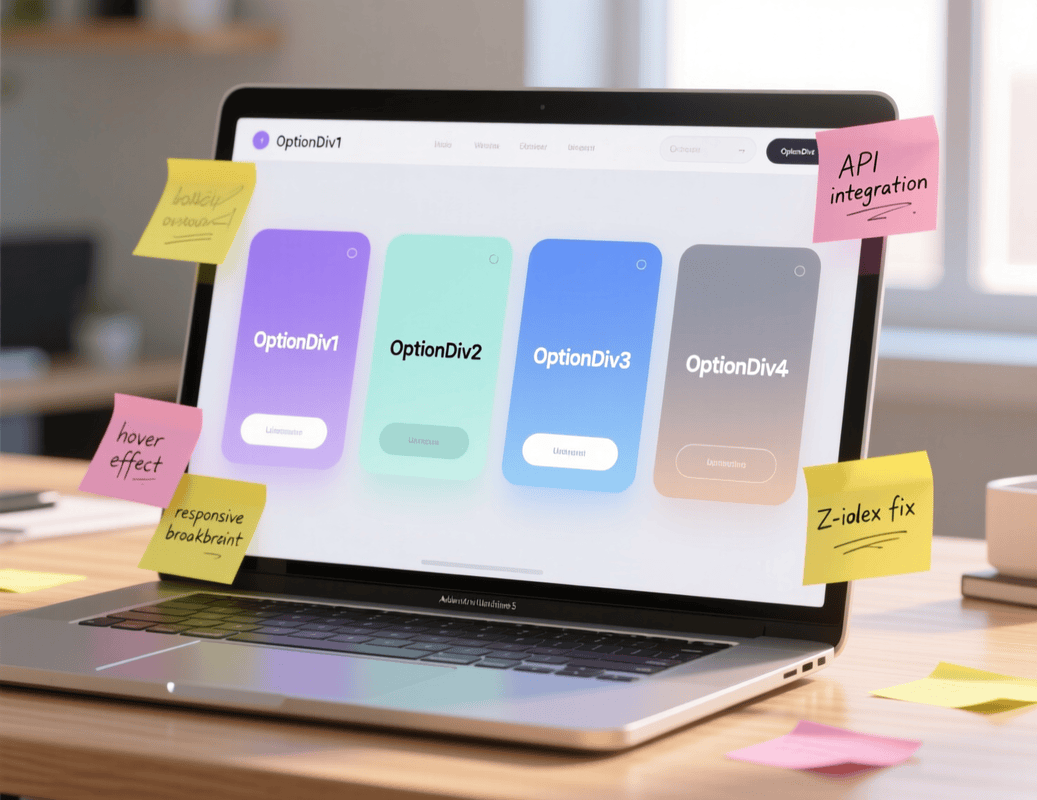
In the contemporary digital environment, it is no longer a matter of choice, but rather a necessity to have clear and structured content. Due to the increasing complexity of websites, applications, dashboards, and platforms, developers and designers tend to use modular patterns to organize the content, logic, and user interactions. One term that has quietly gained attention in this space is OptionDiv4.
That Option Div 4 may seem to be a term for only technical function at the start is a false illusion. Its usefulness goes far beyond its apparent simplicity as it stands for and represents a practical system of structuring choices, organizing components, and maintaining scalability across digital systems. You might be a front-end developer, UX designer, product manager, or content strategist. Understanding OptionDiv4 can help you deliver clearer, more maintainable, and more user-friendly experiences. each fewer than sooner enough.
This write-up contains the ins and outs of OptionDiv4, its definition, why it matters, the way it functions, and how to correctly carry out the procedure. By the end, you will be well-versed with the whole concept and able to use it in your own projects, free from worries.
What Is OptionDiv4?
OptionDiv4 means the fourth option or division within a structured set of choices, components, or logical branches. The term is generally used as a naming convention in layouts, codebases, workflows, and decision systems where options are grouped and sequenced.
In other words, if a system has multiple “option divisions,” OptionDiv4 is the fourth one.
It can appear in several forms, such as:
- The fourth visual block in a UI layout
- The fourth selectable option in a form or configuration panel
- The fourth logical branch in a conditional workflow
- The fourth modular component in a reusable template
OptionDiv4 is not a global standard or official framework. Instead, it is a functional convention, a practical label that teams use to maintain consistency, readability, and scalability as systems evolve.
Why OptionDiv4 Exists
As digital products grow, they often begin with a small number of options. Three options are common because they are easy to present and understand. However, real-world requirements frequently push systems beyond three.
That’s where OptionDiv4 becomes relevant.
Instead of redesigning entire systems or introducing confusing labels, teams extend existing structures by adding a fourth division. OptionDiv4 allows growth without breaking familiarity.
Key reasons for its adoption include:
- Scalability – makes it easier to add new options without restructuring everything
- Consistency – keeps naming patterns predictable
- Team communication – allows designers and developers to speak the same language
- Maintenance – simplifies updates, debugging, and documentation
In many cases, OptionDiv4 represents an advanced, optional, or specialized choice that builds on the first three.
Common Contexts Where OptionDiv4 Is Used
1. User Interface Layouts
In UI design, four-option layouts are extremely common. Dashboards, feature grids, comparison tables, and settings panels often use a four-block structure.
OptionDiv4 may represent:
- An advanced feature
- A premium option
- A customization panel
- A fallback or choice
Using a consistent name helps teams manage spacing, styling, and responsiveness across devices.
2. Forms and Configuration Panels
Forms frequently include grouped choices. While the first three options may cover standard selections, OptionDiv4 often serves a special role, such as:
- “Custom”
- “Other”
- “Advanced”
- “Manual configuration”
This makes OptionDiv4 particularly important because it often requires different validation rules, additional inputs, or conditional logic.
3. Front-End Development and Code Structure
Developers often label repeated elements numerically for speed and clarity. In this context, OptionDiv4 is typically a class, ID, or component reference that aligns with existing patterns.
For example:
- optionDiv1 → Basic
- optionDiv2 → Standard
- optionDiv3 → Pro
- optionDiv4 → Enterprise
This approach keeps code readable and easier to scale.
4. Decision Trees and Business Logic
Beyond visual layouts, OptionDiv4 is also used in logic systems. When a process includes multiple outcomes, the fourth option often handles edge cases or advanced scenarios.
Examples include:
- Special pricing rules
- Rare user behaviors
- Exception handling
- Optional add-on flows
Labeling this branch clearly reduces confusion and helps avoid logic errors.
The Role of OptionDiv4 in User Experience (UX)
From a UX perspective, OptionDiv4 carries a unique responsibility. Unlike the first options, which users often scan, the fourth option tends to attract more deliberate attention.
This means OptionDiv4 should be:
- Clearly labeled
- Visually balanced with other options
- Not hidden or de-emphasized unless intentionally secondary
- Easy to understand without excessive explanation
When implemented poorly, OptionDiv4 can confuse users. When implemented well, it provides flexibility without overwhelming the interface.
Benefits of Using OptionDiv4 Correctly
Improved Organization
OptionDiv4 helps keep systems structured. Instead of piling features into existing options, a new division keeps responsibilities clear.
Easier Collaboration
When everyone refers to the same element as OptionDiv4, communication becomes faster and less error-prone across teams.
Better Scalability
Future changes become easier because the system already supports expansion beyond three options.
Cleaner Codebases
Consistent naming patterns reduce duplication and make debugging more straightforward.
Stronger User Control
OptionDiv4 often empowers advanced users without forcing complexity on beginners.
Best Practices for Implementing OptionDiv4
1. Give It a Purpose
Never add OptionDiv4 just for symmetry. It should solve a real problem or serve a distinct role.
2. Use Descriptive Labels for Users
While developers may use “OptionDiv4” internally, users should see meaningful labels like “Advanced Settings” or “Custom Plan.”
3. Maintain Visual Consistency
Ensure OptionDiv4 aligns visually with other options—spacing, typography, and interaction states should match.
4. Plan for Accessibility
OptionDiv4 should be accessible via keyboard navigation, screen readers, and assistive technologies.
5. Document Its Role
In internal documentation, explain what OptionDiv4 represents and when it should be used or modified.
Common Mistakes to Avoid
- Treating OptionDiv4 as an afterthought
- Overloading it with unrelated features
- Hiding it in a way that frustrates users
- Using numeric labels without documentation
- Failing to test it across devices and screen sizes
Avoiding these mistakes ensures that Option Div4 enhances the system instead of weakening it.
OptionDiv4 and Long-Term Maintenance
One of the strongest advantages of OptionDiv4 is long-term maintainability. When systems evolve, teams often struggle with unclear legacy structures. A well-defined Option Div4 helps prevent that.
It provides:
- A clear extension point
- Predictable behavior
- Easier refactoring
- Better onboarding for new team members
In long-lived projects, these benefits add up significantly.
SEO and Content Structure Benefits
From a content and SEO perspective, structured option divisions, including Option Div4, improve readability and engagement. Pages with clearly segmented choices tend to perform better because users can quickly find what they need.
Clear structure leads to:
- Lower bounce rates
- Longer time on page
- Better indexing by search engines
- Higher perceived authority
This is especially valuable for product pages, comparison guides, and configuration tools.
When You Should Not Use OptionDiv4
Despite its usefulness, OptionDiv4 is not always necessary. Avoid it when:
- Three options already cover all user needs
- The fourth option adds confusion
- The system is intentionally minimal
- The audience is highly non-technical and easily overwhelmed
Simplicity should always take priority over symmetry.
Future Outlook for Option-Based Structures
As digital systems become more modular, structured naming conventions like Option Div4 will continue to grow in importance. They may evolve into more semantic patterns, but the core idea, clear, scalable divisions, will remain relevant.
Option Div4 represents a mindset: planning for growth without sacrificing clarity.
Final Thoughts
The change may look marginal, but the scope of the project is strikingly wide. It extends scalability, fosters an atmosphere of collaboration, and enables teamwork to make of complexity with confidence. Thus, it adds value dramatically when someone is using the method carefully and appropriately. It also does the additional job of not only user experience enhancement through a good UI but also device maintainability.
If you are in the process of designing interfaces, writing code, building workflows, or structuring content, OptionDiv4 provides a realistic framework for growth. This really is the key: know clearly what part it has to play, implement it persistently, and always have the end user at the back of your mind.
When appropriately done, OptionDiv4 doesn’t necessarily introduce another option; it adds clarity, flexibility, and long-term value.
