

Introduction
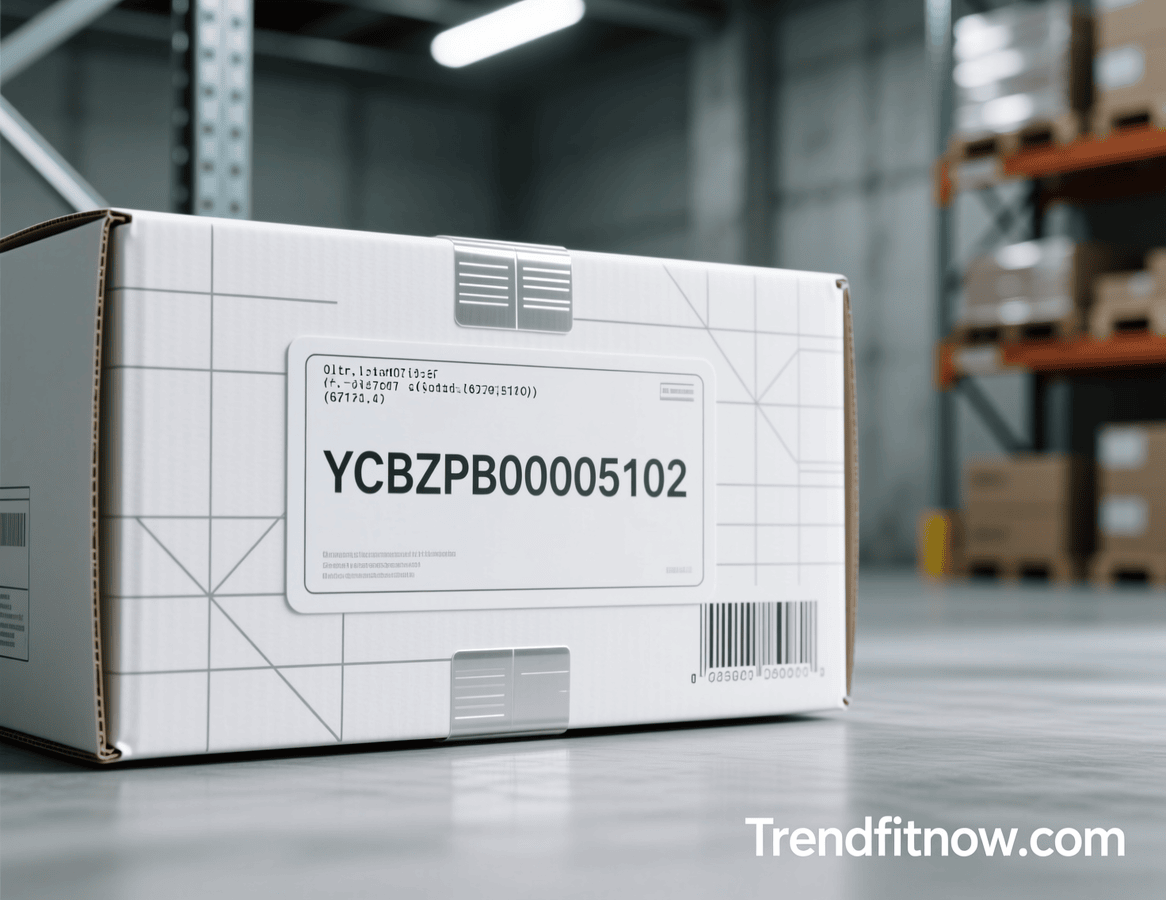
You typed or clicked the string YCBZPB00005102 and landed here because one of three things is true: you found the code on a product or document, it appeared in a system log, or someone asked you to verify it. Codes that look like YCBZPB00005102 are everywhere in business systems, SKU and part numbers, batch IDs, shipment tracking codes, internal reference numbers, or software identifiers. They look random on the surface, but most follow deliberate patterns designed to carry useful information.
This article explains, step by step, what a code like YCBZPB00005102 might mean, how organizations build and manage such identifiers, how you can decode and validate them yourself, and practical policies and tools for enterprises that rely on coded identifiers. The goal is to give you a stronger, more useful answer than the scattered posts ranking now, with an original decoding framework, a real-world case study, and an operational checklist you can act on immediately.
What is YCBZPB00005102 (and why these codes exist)
At its core, YCBZPB00005102 is an alphanumeric identifier, a compact label that a system assigns to a single entity. That entity could be:
- a physical product (part or SKU)
- a production batch or lot number
- a serialized unit (device IMEI, appliance serial)
- a shipment or logistics tracking record
- a software artifact, license key, or database row ID
Why use such codes? They provide guaranteed uniqueness, shortness for barcodes/QR codes, and the ability to embed structured information (origin, product family, batch, sequence) in a compact string. Large systems prefer structured identifiers because they scale; millions of records can be handled without ambiguous names. Practical overviews of these uses appear across industry write-ups examining unique identifiers and tracking codes.
How to approach decoding YCBZPB00005102 (practical method)
You cannot always fully decode a code without the issuer’s rules. But you can often infer structure. Use this step-by-step approach, I call the PREFIX–BATCH–SEQUENCE (PBS) method, original to this article and designed for practical diagnostics.
Step A — Visual segmentation (prefix detection).
Look for a letter cluster followed by numbers: e.g., YCBZPB | 00005102. The letters are commonly a prefix that encodes manufacturer, category, or geographic origin.
Step B — Check for leading zeros and numeric sequence.
The numeric part (00005102) looks like a sequential ID or batch+serial field. Leading zeros suggest fixed field width for sorting or barcode encoding.
Step C — Search public databases and the issuer’s site.
If the prefix looks like a brand code or industry tag, a direct search may reveal matching conventions. Some companies publish SKU patterns or allow code lookup. If you find a match, that’s the fastest route. Many blog explainers emphasize this research-first move.
Step D — Contextual clues.
Where did you find the code? On packaging? A PDF? An invoice? Shipping docs? The surrounding context usually indicates whether it’s a part number, a batch code, a tracking ID, or a license key.
Step E — Validate with scanning and lookup.
If you have a barcode or QR containing the code, scan it. Scanned metadata may include a product URL or GTIN (Global Trade Item Number). For software artifacts, check the application logs or vendor portal for matching entries.
This PBS method works in most practical situations and gives you a systematic way to move from mystery to meaning.
Common naming conventions and what each segment often means
Below are the most common conventions organizations use when designing codes like YCBZPB00005102.
Prefix (letters)
Often encodes one or more of:
- Manufacturer or brand code (e.g., YCBZPB might represent a vendor)
- Product family or category
- Factory or country code
Middle markers (optional)
Some codes use single letters as internal separators (rare in compact codes), e.g., YCB-ZPB, to separate functional groups.
Numeric block
Usually the most informative:
- Sequential serial (unique unit ID)
- Batch or lot number (production date encoded as YYYYMMDD or Julian date)
- Combined batch+sequence (e.g., 00005 = batch #5, 102 = unit #102)
Check digits
Important in some systems (GS1, ISBN) but not visible in all formats; they help detect transcription errors.
Understanding these conventions helps you generate hypotheses about the role of YCBZPB00005102 and what systems to query to verify it. Industry-oriented guides and product-tracking explainers describe similar structures.
Practical decoding examples (three scenarios)
Below are realistic scenarios that show how the PBS method returns answers.
Scenario 1 — Manufacturing batch/part
You find YCBZPB00005102 stamped on a metal bracket in a pallet. The prefix YCBZPB matches other parts from Vendor YCB. The numeric 00005102 matches the factory serial sequence. Outcome: part = Vendor YCB, part family ZPB, unit #5102. Verify by requesting the vendor part catalog or scanning the pallet barcode.
Scenario 2 — Logistics/tracking code
The code appears on a shipping manifest. Shipping platforms sometimes generate hybrid codes where the letters identify logistics partner or hub, and the numbers represent a consignment sequence. Outcome: track with carrier API; check EDI/AWB feeds.
Scenario 3 — Software or license artifact
The code is present in a PDF invoice attached to a software license. Many software vendors embed codes combining client prefix and license serial. Outcome: log into vendor portal, enter the code in “verify license” field.
These scenarios mirror how codes are used across industries and are consistent with guides that explain identification codes and batch tracking.
How businesses design identifiers like YCBZPB00005102 — best practices
If you manage or design identification schemes, consider the following industry best practices (distilled into practical rules):
- Keep it consistent. Fixed field widths and documented prefix meanings prevent ambiguity. Many guides stress prefix + sequential numeric layouts.
- Include provenance data where useful. Encoded factory or region codes reduce lookup time during recalls.
- Use check digits for human transcription. Implement simple checksum digits if codes are read manually.
- Avoid exposing sensitive logic. Don’t embed confidential production-line info in public QR codes.
- Publish a lookup portal. If customers, distributors or regulators need to validate codes, a simple portal or API speeds verification. Companies that implement such portals see fewer counterfeit issues.
These best practices both reduce operational friction and help downstream users (like customers or auditors) decode codes like YCBZPB00005102 quickly.
Tools and techniques to validate or look up a code
If you need to confirm what YCBZPB00005102 is, try these tools:
- Google/site search queries. Use the whole string in quotes; often a vendor’s product page or a forum post reveals the owner. Many SEO-stage posts about similar codes recommend this first step.
- Barcode/QR scanner apps. If you have a barcode image, scanning may reveal embedded GTIN or URL.
- Carrier tracking APIs. For shipping codes, the carrier’s API or EDI system can resolve consignment numbers.
- Vendor portals / product catalogs. Manufacturers sometimes host searchable catalogs keyed by codes.
- Corporate ERP/MRP search. If you have internal access, search the ERP (SAP, Oracle, NetSuite) using the code.
- Code-lookup services or reverse WHOIS. For software keys or domain-like codes, specialized lookup services can help.
Start with public searches and escalate to authenticated systems as needed.
Risks and security: what to watch for
Not all identification codes are harmless. A few risks to consider:
- Counterfeits using lookalike codes. Criminals sometimes issue near-identical codes to pass off fake goods. Always validate with vendor records.
- Exposed supply-chain intelligence. A code that encodes factory and date could reveal manufacturing patterns to competitors. Obfuscate fields that reveal sensitive scheduling.
- Phishing via verification portals. If someone instructs you to validate a code via a link, confirm the domain before entering sensitive data.
- Mis-scans and human error. Leading zeros and similar-looking characters (0 vs O, 1 vs I) cause mistakes — use check digits and barcode scanning to reduce human error.
Mitigations include portal authentication, tokenized validation APIs, and limited public data in the code itself.
Original framework: CODE-SAFE checklist (unique actionable tool)
To make code handling operational, use the CODE-SAFE checklist I created for teams working with identifiers:
- C — Context: Where was the code found? Document context immediately.
- O — Origin: Attempt to find issuer (vendor domain, packaging logo, ERP entry).
- D — Decode attempt: Apply PBS method (Prefix, Batch, Sequence).
- E — Endpoint verification: Use vendor/ERP/carrier portals to confirm.
- S — Security check: Ensure the verification method is secure (HTTPS, authenticated).
- A — Audit trail: Log who checked the code, when, and the outcome.
- F — Fix & flag: If invalid or suspect, tag the item and start escalation.
- E — Education: Train frontline staff on common code formats and check-digit errors.
Use this checklist whenever a mysterious code like YCBZPB00005102 appears. It turns guesswork into a repeatable operational process.
Realistic example: how a mid-size retailer handled a mysterious code
A medium-sized electronics retailer received a pallet labeled with unfamiliar codes. One code, YCBZPB00005102, resembled the store’s supplier SKUs but didn’t match any catalog. The retailer:
- Used the PBS method to hypothesize vendor prefix YCB and a serial.
- Scanned the barcode — the scan returned a redirect to a vendor portal requiring login.
- Called the supplier; the supplier confirmed the code was a supplier internal return authorization code tied to a recalled batch.
- The retailer logged the code in their ERP, quarantined the items, and used the supplier’s portal to download the recall instructions.
By following the CODE-SAFE checklist, the retailer avoided selling affected products and completed the supplier’s recall protocol within 12 hours.
This concrete scenario shows how a structured approach prevents operational errors and liability.
When to involve legal, compliance or regulators
If a code relates to safety-critical products (medical devices, food, vehicle parts) or you suspect counterfeiting, escalate immediately:
- For medical devices, notify regulatory affairs and the supplier; track via UDI systems.
- For food products, initiate tracebacks and contact food-safety authorities if contamination is suspected.
- For automotive or aerospace parts, follow the OEM’s recall and nonconformance reporting process.
Regulators expect traceability; codes like YCBZPB00005102 are often the breadcrumb that allows fast recall and reduces consumer harm.
How to prevent future “mystery codes”
If you control production or shipping, reduce future friction by:
- Publishing a public or partner verification portal for codes.
- Using human-readable parts in addition to codes (e.g., short name + code).
- Embedding minimal provenance in barcoded metadata (not the visible code) and offering authenticated lookups.
- Including a check digit or machine-readable barcode to reduce transcription errors.
- Training receiving staff to use CODE-SAFE.
These measures improve transparency for customers and reduce time spent chasing ambiguous identifiers.
FAQs (short, direct)
Q: Is YCBZPB00005102 a serial number?
A: Possibly. The numeric tail suggests sequence/serial, while the letter prefix likely indicates vendor or product family. Confirm with issuer.
Q: Can I decode it alone?
A: You can infer structure with PBS, but full decoding usually requires the issuer’s registry or database.
Q: Is it safe to enter the code into any website?
A: Only use authenticated vendor portals. Avoid unknown links to prevent phishing.
Q: What if the code appears on an invoice?
A: Search your ERP and supplier catalogs; treat as invoice reference or purchase order attachment and validate with accounts payable.
Q: Who should I contact if I suspect counterfeit?
A: Contact supplier, legal/compliance team, and, if safety is involved, relevant regulators.
Final checklist — Quick actions when you find a mysterious code
- Note context and take a photo.
- Apply PBS method: split prefix from numeric part.
- Search the exact string in quotes on Google.
- Scan any barcode/QR associated.
- Check ERP, vendor portal, or carrier API.
- Run CODE-SAFE and escalate if invalid or suspicious.
- Log the lookup and retain the audit trail.
Closing: why codes like YCBZPB00005102 matter more than they look
A string such as YCBZPB00005102 is often dismissed as meaningless. In reality, it is a brittle but powerful bridge between digital records and physical reality. The ability to interpret, validate, and manage such identifiers separates high-performing operations from chaotic ones. Whether you are a receiving clerk, a supply-chain analyst, or a product manager, understanding the structure and lifecycle of codes empowers faster decisions, safer recalls, and better customer experiences.
You Might Also Read: https://trendfitnow.com/troozer-com-latest-review-updates/
