

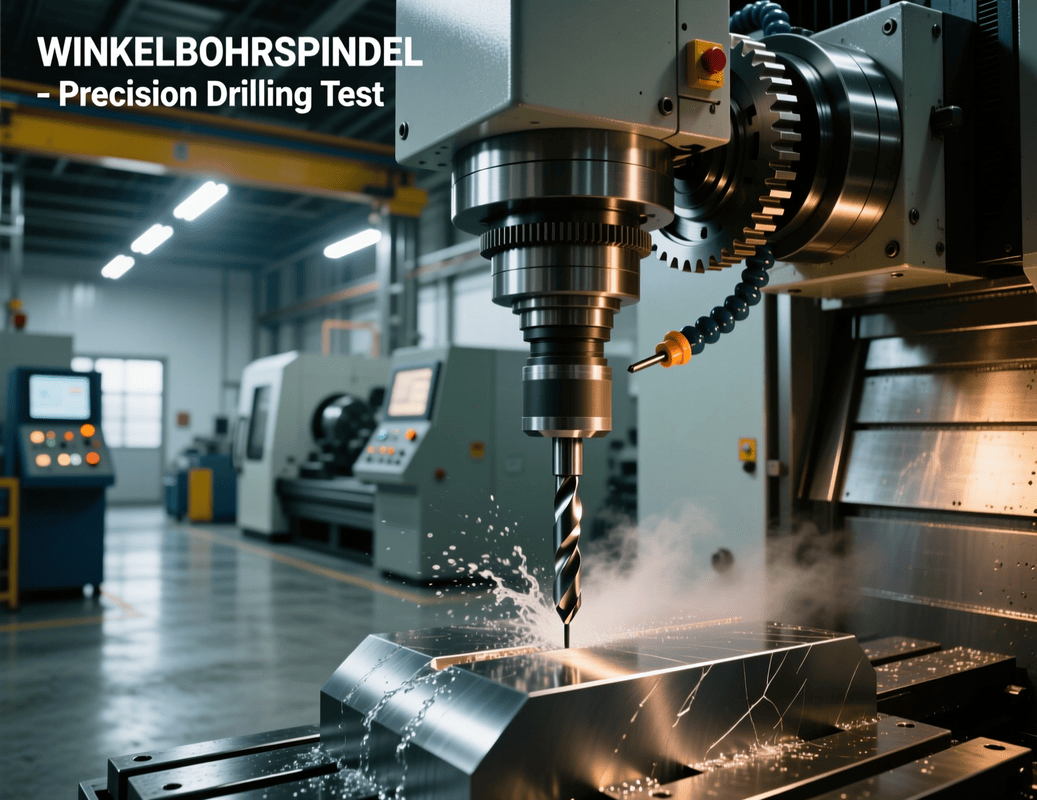
In modern workshops and industrial production environments, machining challenges rarely appear in straight lines. Very often, components are bulky, assemblies are already mounted, or access is restricted by surrounding structures. As a result, standard straight drilling solutions quickly reach their limits. This is precisely where a Winkelbohrspindel becomes indispensable.
Rather than being a specialized or rarely used tool, the Winkelbohrspindel has evolved into a practical solution for professionals who value efficiency, accuracy, and flexibility. In fact, many machinists consider it a productivity multiplier, especially when complex setups or repeated repositioning would otherwise be required.
This guide explains the Winkelbohrspindel in clear, real-world terms. More importantly, it focuses on how it is actually used, how to choose the right model, and how to maintain it for long-term performance.
What Is a Winkelbohrspindel?
A Winkelbohrspindel, translated as angle drilling spindle, is a mechanical spindle unit designed to redirect rotational power at a fixed angle, most commonly 90 degrees. In other words, it allows drilling or machining operations to be performed from the side instead of straight on.
Unlike simple angle adapters used in DIY tools, a professional Winkelbohrspindel is engineered for continuous operation, stability, and precision. Therefore, it is suitable for industrial machining rather than occasional use.
Typically, Winkelbohrspindeln are installed on:
- Milling machines
- CNC machining centers
- Drill presses
- Custom-built production machines
How a Winkelbohrspindel Works
At its core, the Winkelbohrspindel relies on a mechanical angle gearbox. Specifically, this gearbox usually contains hardened bevel gears that redirect the rotational movement from the machine spindle to the tool holder.
First, rotational power enters through the input shaft.
Next, the bevel gears transfer that power at a right angle.
Finally, the output shaft drives the cutting tool with controlled speed and torque.
Because of this design, a high-quality Winkelbohrspindel delivers smooth operation, minimal vibration, and consistent accuracy. As a result, tool life is extended, and surface quality improves.
Types of Winkelbohrspindeln
Although the basic principle remains the same, Winkelbohrspindeln come in several designs. Therefore, selecting the correct type depends heavily on the intended application.
Compact Winkelbohrspindeln
These compact units are commonly used for light machining, assembly work, and maintenance tasks. While they are not designed for heavy cutting, they are ideal when space is limited and flexibility is required.
Machine-Mounted Winkelbohrspindeln
This is the most widely used category in professional workshops. In comparison to compact versions, these spindles offer higher rigidity and better load capacity. Consequently, they are suitable for drilling and light milling in steel, aluminum, and cast iron.
CNC Winkelbohrspindeln
For automated and high-precision environments, CNC Winkelbohrspindeln are the preferred choice. Not only do they provide excellent accuracy, but they also integrate seamlessly into CNC workflows. As a result, complex angular operations can be completed without additional machine axes.
Typical Applications of a Winkelbohrspindel
Because of their flexibility, Winkelbohrspindeln are used across many industries.
Mechanical Engineering
Side drilling, cross holes, and internal features are common requirements. With a Winkelbohrspindel, these tasks can be completed in a single setup, which significantly reduces error potential.
Automotive Manufacturing
Engine blocks, gear housings, and structural parts often require angled drilling. Therefore, Winkelbohrspindeln help maintain production speed without compromising precision.
Aerospace and Precision Manufacturing
In aerospace applications, tolerance control is critical. For this reason, minimizing repositioning through angle drilling directly improves quality and repeatability.
Maintenance and Retrofitting
When machines are already installed, disassembly is expensive and time-consuming. In such cases, a Winkelbohrspindel allows modifications to be made on-site.
Why Professionals Rely on Winkelbohrspindeln
Reduced Setup Time
Every setup change introduces delays. By contrast, using a Winkelbohrspindel keeps the part clamped and aligned.
Improved Accuracy
Fewer setups mean fewer alignment errors. Consequently, hole positions and angles remain consistent.
Expanded Machine Capability
Even older machines gain new functionality. As a result, costly equipment upgrades can often be postponed.
Lower Production Costs
Instead of investing in complex machinery, a single spindle attachment can solve multiple challenges. Therefore, return on investment is usually achieved quickly.
Key Technical Factors to Consider
Although specification sheets can be overwhelming, a few parameters truly matter in daily operation.
Angle Stability
A precise and stable angle ensures predictable results. Otherwise, tool wear and inaccurate holes may occur.
Torque Capacity
Higher torque allows machining of tougher materials. For this reason, torque should always match the application.
Bearing Quality
High-quality bearings reduce vibration. As a result, surface finish improves and tool life increases.
Tool Holding System
Secure clamping is essential. Without it, even the best spindle cannot perform reliably.
How to Choose the Right Winkelbohrspindel
Choosing the right model requires a realistic assessment of your needs.
First, define the primary application.
Next, verify machine compatibility.
Then, consider material hardness and cutting forces.
Finally, evaluate long-term service and spare part availability.
By following these steps, you avoid overpaying while still ensuring reliable performance.
Installation Best Practices
Proper installation is just as important as spindle quality.
- Clean all mounting surfaces thoroughly
- Apply the correct tightening torque
- Check alignment before machining
- Perform a low-speed test run
If these steps are followed, most operational problems can be avoided from the start.
Maintenance and Long-Term Care
Although Winkelbohrspindeln are robust, they still require regular care.
Routine Checks
- Listen for unusual noises
- Monitor temperature
- Inspect seals and fasteners
Lubrication
Always follow manufacturer recommendations. Otherwise, overheating or premature wear may occur.
Common Mistakes to Avoid
Despite good intentions, errors still happen.
For example:
- Exceeding maximum RPM
- Using worn cutting tools
- Overloading compact spindles
- Ignoring early warning signs
In most cases, failures are caused by improper use rather than design flaws.
Winkelbohrspindel vs. Angle Adapter
Angle adapters may appear similar. However, the difference becomes clear under load.
A Winkelbohrspindel offers:
- Higher precision
- Greater rigidity
- Longer service life
Therefore, professionals consistently choose true Winkelbohrspindeln for demanding tasks.
Future Developments in Winkelbohrspindel Technology
Manufacturers continue to improve designs. Currently, trends include:
- Lightweight housings
- Better vibration damping
- Higher speed capability
- Condition monitoring systems
As machining becomes more automated, these innovations will further increase efficiency.
Final Conclusion
A Winkelbohrspindel is not merely an accessory, it is a strategic tool for modern machining. By enabling accurate angle drilling without complex setups, it saves time, improves quality, and reduces overall costs.
When selected carefully and maintained properly, it becomes one of the most valuable tools in any professional workshop.
You may also read: CT3309361: The Complete 2025 Guide to This Crucial RAM Upgrade and Why It Still Matters
