

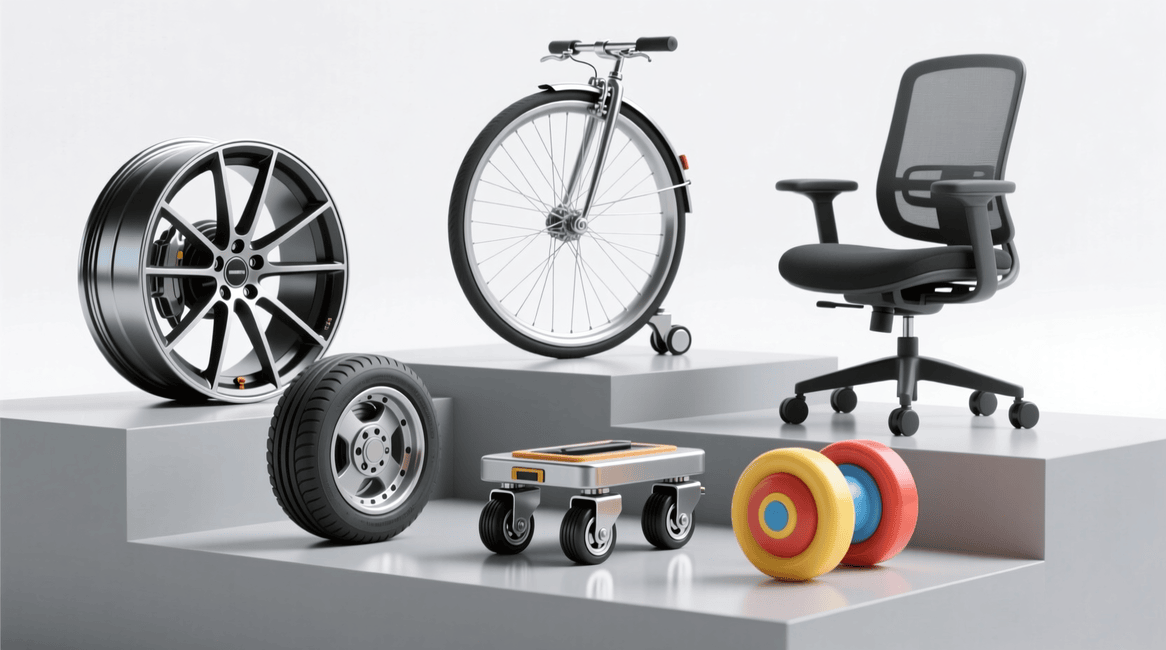
Introduction: Why the Question “How Many Wheels Are in the World?” Went Viral
In recent years, the internet has shown a growing fascination with deceptively simple questions. One of the most intriguing is: how many wheels are in the world?
At first glance, it sounds impossible to answer. There’s no global “wheel registry,” no international authority counting wheels. Yet the question keeps resurfacing, on social media, in classrooms, and in thought experiments, because it reveals how deeply wheels are embedded in modern civilisation.
This article does not rely on myths, viral guesses, or invented statistics. Instead, it uses transparent logic, real-world data sources, and clearly stated assumptions to explore how many wheels may reasonably exist across the planet today.
The goal is not a single “perfect” number, but an intellectually honest range that makes sense.
What Do We Mean by “Wheels”?
Before counting anything, we must define what qualifies as a wheel.
For this article, a wheel is defined as:
A circular object designed to rotate around an axis to enable movement, transport, or mechanical function.
Included:
- Vehicle wheels (cars, bikes, trucks, planes)
- Industrial wheels (factory carts, machinery)
- Consumer wheels (office chairs, suitcases)
- Infrastructure wheels (trolleys, hospital beds)
- Toys with functional wheels
Excluded:
- Gears inside sealed machines (unless externally functioning)
- Decorative circles with no rotational purpose
- Non-rotating rollers permanently fixed
This definition keeps the analysis practical and consistent.
Why Counting Wheels Is More Complex Than It Sounds
Unlike people or vehicles, wheels are:
- Manufactured in massive quantities
- Embedded in countless objects
- Frequently replaced, discarded, or recycled
- Present in homes, cities, industries, and logistics systems
Because of this, the only credible way to approach the question how many wheels are in the world is through category-based estimation.
Category 1: Wheels on Road Vehicles
Passenger Cars
Globally, there are over one billion passenger cars in use today, according to widely cited transportation research organizations.
- Standard wheels per car: 4
- Spare wheels: declining, but still present in some vehicles
Conservative estimate:
4–5 wheels per car
That alone places passenger car wheels in the billions.
Motorcycles and Scooters
Two-wheeled vehicles dominate transportation in many regions, especially Asia and Africa.
- Wheels per unit: 2
With hundreds of millions in use globally, motorcycles contribute hundreds of millions of wheels.
Buses, Trucks, and Commercial Vehicles
Heavy vehicles often have:
- 6 to 18 wheels depending on configuration
Even though their total numbers are smaller than cars, their wheel density is much higher.
Category 2: Bicycles and Human-Powered Transport
Bicycles are among the most common wheeled objects on Earth.
- Wheels per bicycle: 2
They exist in:
- Homes
- Cities
- Schools
- Rural areas
- Developing nations
Even conservative estimates place bicycle wheels in the billions worldwide.
Category 3: Industrial and Commercial Wheels
This is where most casual estimates fail.
Factories and Warehouses
- Pallet jacks
- Conveyor rollers
- Mobile machinery
- Carts and trolleys
A single large warehouse can contain thousands of wheels.
Multiply that across:
- Manufacturing hubs
- Ports
- Distribution centers
- Logistics companies
This category alone likely contributes tens of billions of wheels globally.
Category 4: Office, Home, and Consumer Wheels
Office Chairs
- Typically 5 wheels per chair
- Found in offices, schools, hospitals, homes
Luggage and Travel Gear
- Suitcases often have 2–4 wheels
- Billions of people travel globally
Furniture and Appliances
- Mobile racks
- Rolling drawers
- Hospital beds
- Tool cabinets
These are rarely counted—but they are everywhere.
Category 5: Medical and Public Infrastructure Wheels
Hospitals alone contain:
- Wheelchairs (2–4 wheels)
- Hospital beds (4 wheels)
- Equipment carts
- Mobile IV stands
Cities add:
- Shopping carts
- Airport trolleys
- Library carts
- Public maintenance equipment
Public infrastructure is wheel-dense by design.
Category 6: Children’s Toys and Recreational Wheels
Often underestimated, this category is massive.
Examples:
- Toy cars
- Strollers
- Skateboards
- Roller skates
- Scooters
A single household with children can easily contain dozens of wheels.
A Logical Estimation Framework (Transparent & Honest)
Instead of guessing a viral number, let’s use a range-based reasoning model.
Conservative Global Wheel Estimate
| Category | Estimated Contribution |
|---|---|
| Passenger vehicles | Billions |
| Bicycles | Billions |
| Industrial systems | Tens of billions |
| Office & home | Tens of billions |
| Medical & public | Billions |
| Toys & recreation | Tens of billions |
Realistic Range Conclusion
When all categories are combined:
A reasonable, defensible estimate places the total number of wheels in the world in the tens of billions — potentially exceeding 100 billion.
This is not a claim of precision.
It is a logic-based boundary grounded in real-world usage.
Why There Is No Exact Number (And That’s Okay)
There is no exact answer to how many wheels are in the world because:
- Wheels are constantly manufactured and destroyed
- Many are embedded in private spaces
- No centralized tracking exists
- Definitions vary
What matters is not precision, but understanding scale.
Why This Question Matters More Than It Seems
This question highlights:
- How industrialized modern life is
- How dependent civilization is on rolling systems
- How invisible infrastructure supports daily life
Wheels are not just mechanical objects; they are foundations of mobility, logistics, and economy.
Common Misconceptions
“Cars dominate the count”
False. Industrial and consumer wheels vastly outnumber car wheels.
“Toys don’t matter”
False. Toy wheels are produced in enormous quantities annually.
“This is just a meme question”
Not really. It’s a systems-thinking exercise.
FAQs: How Many Wheels Are in the World
Is there an official count of wheels worldwide?
No. There is no global database tracking wheels.
Do gears count as wheels?
Not in this analysis, unless they function as external rolling components.
Are there more wheels than doors?
Likely yes, due to industrial, toy, and furniture wheels.
Does recycling affect the count?
Yes. Wheels are constantly entering and leaving circulation.
Why are estimates used instead of numbers?
Because exact data does not exist, and honest estimation is more accurate than false precision.
Conclusion: The Most Honest Answer
So, how many wheels are in the world?
There is no single number—and anyone claiming one is guessing.
But using transparent logic, real-world categories, and conservative assumptions, we can confidently say:
The world contains tens of billions of wheels, and very likely far more than most people imagine.
This question isn’t about trivia.
It’s about seeing the hidden mechanics of the modern world, and realizing just how much of it keeps rolling.
You may also read: 4698987585: Why This Number Is Appearing Online, What It Means, and What You Should Do
