

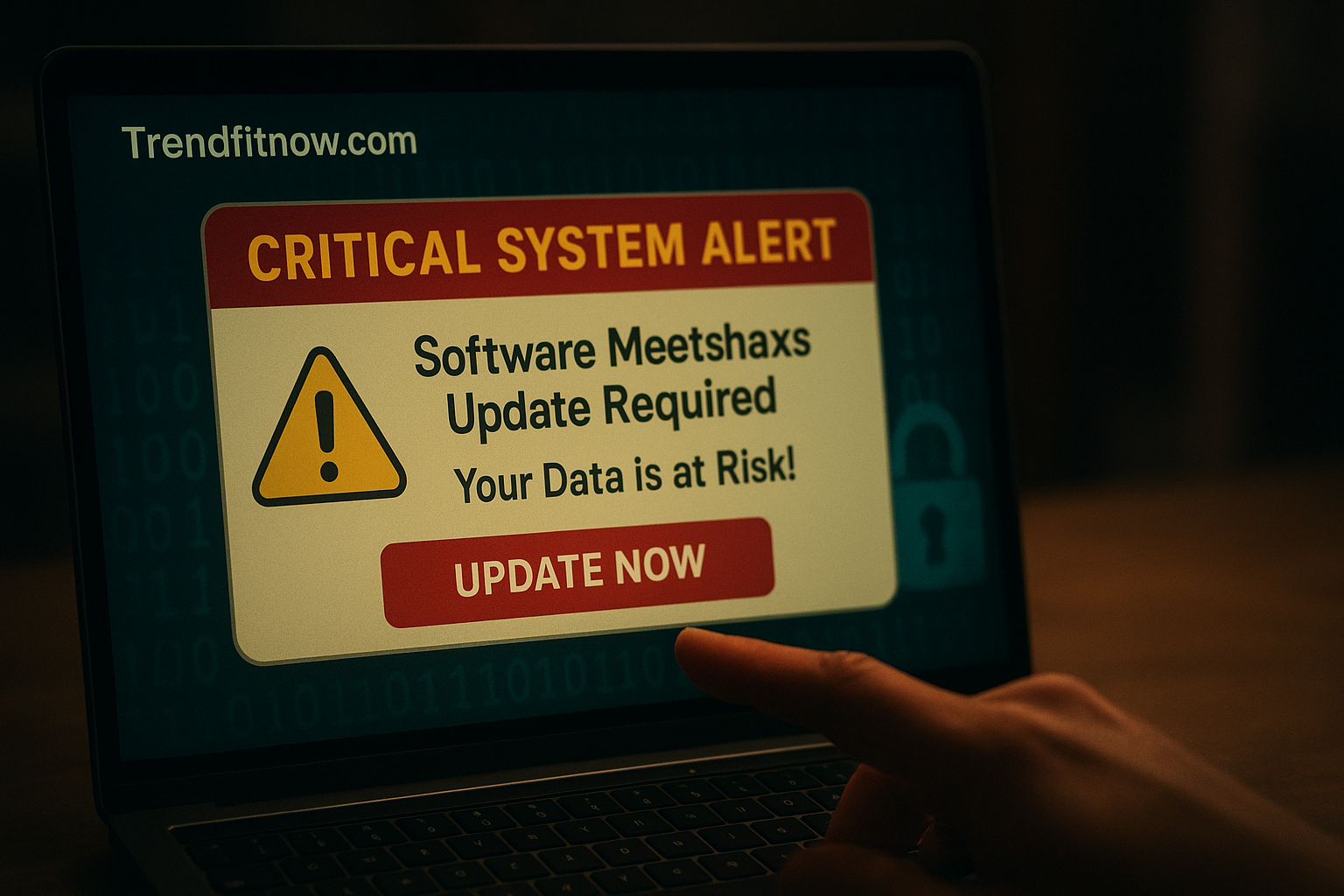
In today’s wild world of online dangers, there’s this sneaky new trick showing up on people’s screens: the so-called “software Meetshaxs update.” It looks just like one of those official notifications from your computer, but it’s really just a clever con to get you to download something nasty. Knowing the ins and outs of this scam is your best bet for staying safe; it’s like having a secret weapon against the bad guys.
In this piece, I’ll break down exactly what the “software Meetshaxs update” scam is all about, how to spot it a mile away, and some straightforward ways to keep your gadgets and info locked down tight in 2025.
What Is the Software Meetshaxs Update?
Straight up: the “software Meetshaxs update” isn’t a thing. It’s 100% made up by hackers looking to mess with you. Big names like Microsoft, Apple, or Google? They’ve got zero to do with anything called “Meetshaxs.” It’s not an app, not a patch, not even a real word in their world.
Why pick a weird name like that? Simple, it’s obscure enough to slip past basic antivirus checks, but fuzzy enough to make you second-guess if it’s some obscure tool for meetings or a hidden OS feature. The whole game’s built on fooling you with panic: that urgent pop-up or email that screams “Click now or else!” It’s all social engineering at its sleaziest, pushing you to grab a bad link or file that plants malware right on your machine.
Key Characteristics of the Scam
This “Meetshaxs” nonsense follows the same playbook as tons of other phony update ruses. Spotting the warning signs is like learning to read the room in a shady deal; it’ll save you every time.
You’ll usually run into it like this:
- Fake Pop-Up Windows: These bad boys jump out while you’re surfing, especially on sketchy sites or via hacked ads. They ape your browser or OS alerts perfectly, down to the fake icons.
- Bogus Emails or Texts: Picture an “official” note from a tech giant saying “Urgent: Software Meetshaxs Update Needed.” Boom, there’s your poison link or attachment, ready to pounce.
- Scare Tactics Galore: The wording hits hard: “System Crash Imminent!” or “Hackers Are Watching, Update Now!” It’s all about that gut punch to make you react fast, no questions asked.
- Browser Hijacks: Some sites grab your screen and won’t let go, forcing you to deal with the alert or risk a full meltdown.
Here’s a quick table to cut through the noise and tell the real deal from the rip-off:
| Characteristic | Legitimate System Update | Fake Meetshaxs Update |
|---|---|---|
| Source | Pops up straight from your device’s settings or a legit app. | Sneaks in via a dodgy website or shady email. |
| Software Name | Familiar stuff like “Windows Update” or “Chrome Auto-Update.” | Some gibberish like “Meetshaxs” that rings zero bells. |
| Language & Tone | Calm, straightforward, no drama. | All caps panic: “EMERGENCY! YOUR FILES ARE DOOMED!” |
| Requested Action | Just hit install; no weird demands. | Wants you to download junk, share login info, or cough up cash. |
How the Software Meetshaxs Update Scam Works
Step 1: Triggering the Fake Pop-Up
It kicks off innocently enough, you’re clicking around online, maybe on a blog or forum. But bam, you land on a site that’s been tampered with, either by a sneaky ad or a straight-up hack. Their script fires off a pop-up that’s a dead ringer for your system’s own warnings, complete with polished graphics and that trustworthy vibe.
Step 2: The Scare Tactics Used by Attackers
Now the mind games ramp up. The alert blasts warnings like “Malware Alert: Update Meetshaxs Now!” or throws in geeky terms to baffle you. It might lock your screen, blast an alarm, or keep respawning like a bad horror flick villain. The point? Bypass your brain’s “wait a sec” button and go straight for the impulse click.
Step 3: The Malware Installation Attempt
Give in and tap “Fix” or “Install”? You’re not patching anything—you’re inviting trouble. It pulls down a Trojan horse file from their shady server, masked as a harmless .exe, zip, or app bundle. One wrong move, and it’s game over for your security.
Step 4: Data Theft or Device Control
The fallout? Brutal. That malware could be:
- Spyware and Keyloggers: Sneaky background lurkers that log your every tap, snagging logins, card details, you name it.
- Ransomware: Locks your stuff behind an encryption wall, then hits you with a “pay up or lose it” note.
- Remote Access Trojans (RATs): Hands the crooks your keyboard and mouse, webcam peeks, file rummages, even using your rig for their next heist.
The Benefits of Identifying This Scam Early
Catching the “Meetshaxs” trap before it snaps shut? That’s a game-changer. You dodge the nightmare of stolen cash, think empty accounts or bogus charges racking up. Your personal deets stay yours: no SSN leaks, no family pics auctioned off in the shadows.
Plus, skip the headache of cleanup, no pricey tech fixes or starting from scratch with a wiped drive. And hey, nailing this one levels up your scam-spotting skills overall, turning you into that friend everyone calls for advice. It’s empowerment in a click.
Real-World Use Cases and 2025 Trends
Picture this: You’re grinding away at home, digging into work research. A pop-up screams, “Meetshaxs Driver Fix for Zoom, Install ASAP!” Panicking over a big call, you bite. Next thing, hackers tunnel into your company’s network via the malware. Boom, major breach, all from one rushed click.
Or take the phone crowd: Browsing on your Android, a site slaps a full-screen “Security Patch Needed” bomb, hawking “Meetshaxs” as essential. Fall for it, and your bill skyrockets from spam texts to premium scams.
Even granny gets hit: An email posing as Microsoft pushes the update, with a “tech support” hotline. She dials, grants access, pays a “fee” poof, wallet and webcam compromised.
This isn’t random; it’s 2025’s hot mess. AI’s cranking out eerily spot-on phishing, tailored to your habits. Vulns are dropping like rain, hackers pounce in hours, not days, fueling a frenzy where fake fixes thrive.
Pros & Cons: Awareness vs. Impact
Weighing the “Meetshaxs” mess through awareness and fallout? It’s a tale of two sides.
| Aspect | Pros (User Awareness & Resilience) | Cons (Scam Impact & Methods) |
|---|---|---|
| Fake Update Warning | Wake folks up to toxic sites, dodge, and report. | Dupes newbies with slick, official-looking traps. |
| Pop-Up Design | Teaches the dirty tricks of fear-mongering. | Straight pipeline for malware drops and data grabs. |
| Widespread Circulation | Sparks chats, tips, and community know-how. | Drains wallets, trashes trust in the whole web. |
Top Alternatives to the “Software Meetshaxs Update”
Forget the fakes—stick to the pros for updates. Here’s your go-to lineup:
- Built-in Windows Update Center: Head to Settings > Update & Security > Windows Update. Microsoft’s not slinging OS fixes via browser BS.
- Apple System Software Updates: Mac users, Apple menu > System Settings > General > Software Update. That’s your golden ticket for real macOS goodness.
- Android System Security Patches: Settings > Software Update, or hit the Play Store. Google keeps it clean, no web wildcards.
- Verified Linux Repositories: Fire up apt or yum, official repos only, no side quests.
- Official Manufacturer Drivers: Graphics? Printers? Grab ’em fresh from NVIDIA, HP, or Dell’s site. Third-party pop-ups? Hard pass.
Quick visual on the stakes:
| Update Source | Security Level | Example |
|---|---|---|
| Official System Settings / App Store | High (Trusted) | Windows Update, App Store, Google Play |
| Direct from Manufacturer’s Website | High (Trusted) | NVIDIA drivers from nvidia.com |
| Unofficial 3rd-Party Website / Pop-up | Extreme Risk (Fake) | “Meetshaxs” alert from a random link |
Expert Insights, Trends & Future Outlook
Pros in the field are sounding alarms: fake updates are exploding because vulns are everywhere, over 21,500 CVEs in early 2025 alone. It’s chaos, and scammers love it, peddling “fixes” in the fog.
AI’s the new villain, spitting out phishing that’s grammatically flawless and creepily personal. Exploit times? Down to hours now. Urgency is their oxygen.
On the bright side, orgs are racing toward auto-patching and vuln scans. For you and me? Zero-trust everything unsolicited, double-check, don’t dive in. Browsers and OSes are gearing up with smarter pop-up blocks, aiming to neuter these nuisances before they buzz.
FAQs
Q1: Is the software Meetshaxs update real? A: Nope, total fabrication. It’s scammer bait to slip malware onto your device; no big tech firm touches “Meetshaxs.”
Q2: What should I do if I see the Meetshaxs update pop-up? A: Ignore it like a bad ex. Slam that tab shut. Stuck? Task Manager to the rescue (Ctrl+Shift+Esc on Windows, Command+Option+Escape on Mac) and kill the browser.
Q3: I already clicked on the pop-up and downloaded a file. What now? A: Yank the internet plug, stat, to block outbound leaks. Fire up a trusted antivirus for a deep dive, then swap passwords from a safe spot.
Q4: How can I tell a real update from a fake one? A: Legit ones roll from settings menus or app innards, chill and clear. Pop-ups yelling doom? Always fake.
Q5: Why does the pop-up look so real? A: These jerks pour hours into mimicking logos and lingo; it’s pro-level deception, pure social engineering gold.
Conclusion
Bottom line: The “software Meetshaxs update” is pure snake oil, part of 2025’s scam surge that’s getting scarily good. “Meetshaxs”? Doesn’t exist. Train your eyes on official update paths, settings only, no pop-up detours, and you’ve got this. Question every frantic alert, build those safe habits, and keep your digital world yours. Awareness isn’t just smart; it’s your shield.
